
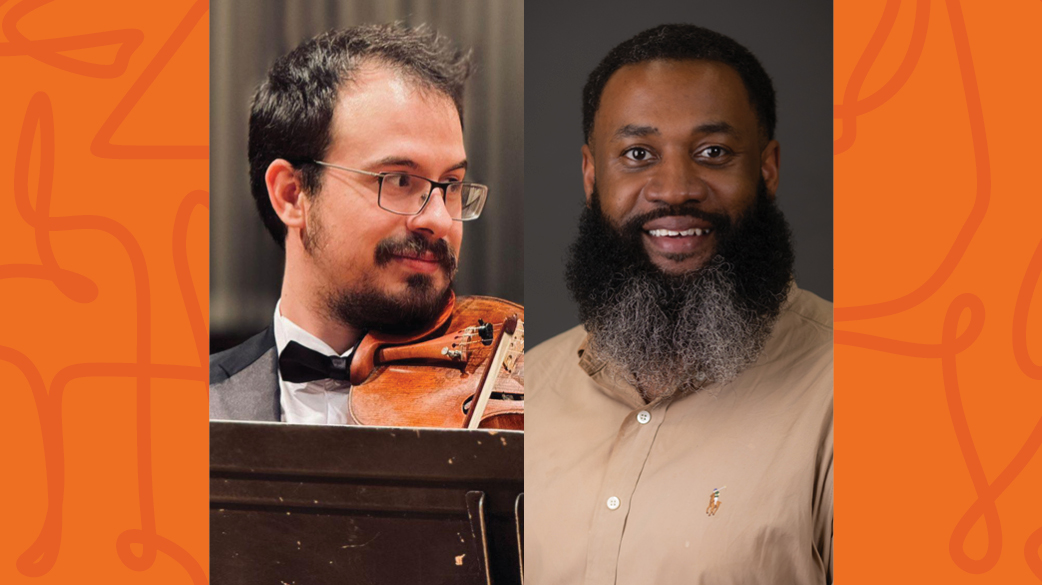
The final Chamber Series concert in MSO’s 81st season, at Galloway Memorial United Methodist church May 2, wraps the evening in a sensual, beautiful bow with Claude Debussy’s beloved String Quartet.
MSO Concertmaster Alexander “Sasho” Ilchev leads us through it with insights for a deeper, richer listening experience of this seminal work.
Its mood shifts and timing swings demand flexibility from Mississippi Symphony String Quartet musicians. Along with violinist Ilchev, the quartet spotlights violinist Vince Massimino, violist Ausra Jasineviciute and cellist Mert Özkan.
“Because Debussy was heavily influenced by other music cultures, the quartet does not have the French style the audience expects it to,” Ilchev said. “In the first movement, the first theme has a very strong character, which gets played around with during the whole quartet, in all of the movements.
“The second movement is a more playful take on the first theme, with some very romantic moments,” he said.
The third, his personal favorite, is more solemn compared with the rest. “It tugs at your heartstrings with its beautiful buildup and climax,” Ilchev said.
“In the fourth movement, Debussy continues morphing the first theme into something new in a different context and it is a constant whirlwind of varying sounds.”
Ilchev admires how Debussy spotlights not only the first violin, but also the other instruments as soloists and orchestral performers — playing with each other to create a different sound quality.
Debussy’s String Quartet is a fantastic close to the evening, but the concert’s opening is what will shake things up, in the best possible way.
Trevor Weston’s 2019 Dig It trots out sweet syncopation and intriguing instrumentation in a funk- and jazz-influenced composition. MSO Clarinetist Lowell Hollinger, a key musician in the ensemble performing it, is especially excited about performing this contemporary piece. Watch and listen for him on soprano clarinet.
The fact that Dig It was written by an African American composer particularly resonates with him. “Much of the literature written for orchestra is not composed by us,” Hollinger said of Black musicians.
“I appreciated that (MSO Music Director) Crafton Beck really tries to find literature that is new and that he is culturally sensitive to the musicians in this orchestra and the Jackson community at large, given the demographics,” he said.
Its instrumentation isn’t the usual combination, but neither is the chamber ensemble it was originally written for, Hollinger pointed out. Dig It was written for the chamber ensemble Bang on a Can All-Stars to perform at the Ecstatic Music Festival in New York City. Their instrumentation includes piano, percussion, cello, bass, electric guitar and clarinet.
In it, the clarinet takes hold with sax-like verve. “Many of the licks in the piece give a jazz flavor that would be typically performed on saxophone,” Hollinger said. “The composer calls the piece ‘funky!’”
Watch and listen, too, for Hollinger in Antonin Dvořák’s Serenade for Wind Instruments, Cello and Bass, the third piece a stellar Chamber Series concert.
As we approach the end of MSO’s remarkable 81st “Season of Genius,” Ilchev took a moment to share some of the high points of his first season as MSO concertmaster. “Definitely performing some of the great symphonic pieces like Rachmaninoff Symphony No. 2 and Berlioz Symphonie Fantastique and going through all of the First Viennese School composers — Mozart, Beethoven, Haydn — has been a great treat,” Ilchev said.
“But being able to perform as a soloist for Daniel Bernard Roumain’s Voodoo Violin Concerto at Duling Hall as part of the season and performing it in the Governor’s Arts Awards ceremony was a great honor.”
Remember how much fun all that was? Come back for more next season!