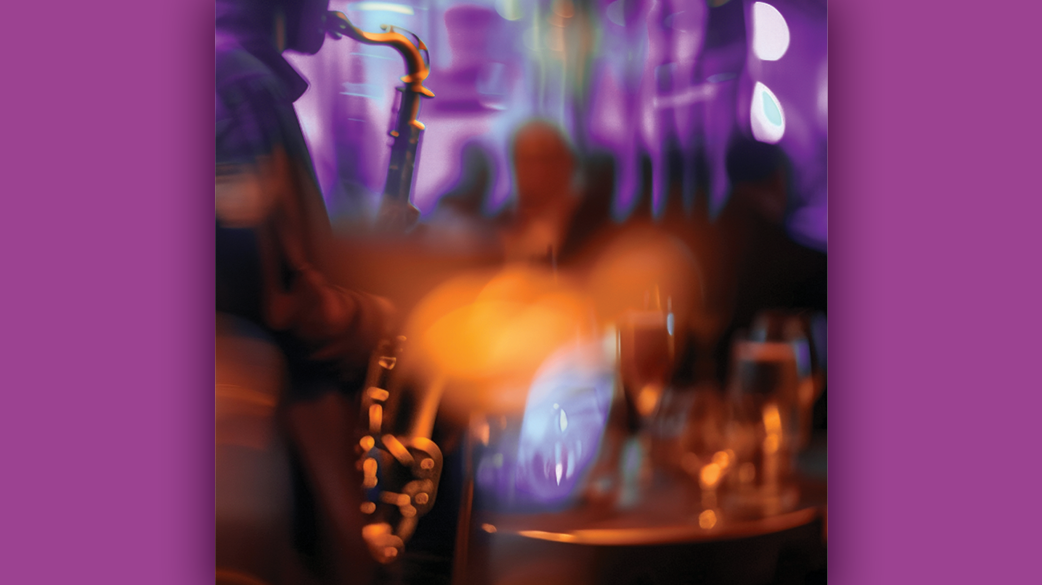
Mississippi Symphony Orchestra cuts loose in its “Quad Fusion” concert Oct. 18, a first outing in the night club setting of Duling Hall and first concert primarily devoted to 21st century works.
This is the music that perks up young ears and resonates with the rhythmic drive of current times, capturing a pulse that can’t be categorized or confined to a single genre. It’s the music emerging from urban hotspots across the country, where serious musicians and young composers gather to listen, jam, experiment and entertain audiences eager to hear the music of the moment.
“I’m very excited, finally, to get this on the books,” MSO Conductor and Music Director Crafton Beck said. It puts MSO on the map, once again, for fresh ideas that embrace the music of today.
Duling Hall’s sociable setting, with its bar and casual air, changes the vibe of the typical symphony performance. Dannel Espinoza, MSO saxophonist and Assistant Professor of Saxophone at the University of Southern Mississippi reflected, “… a more formal concert hall with buttoned-up musicians can make some younger folks shy away from concerts.”
“Quad Fusion” hits the refresh button. So does the concert’s music, which enjoys a certain genre fluidity – pop, rock, electronic and more fold in, taking the music in lively and surprising new directions. Players are jazzed about that.
“It has the entire form and structure of classical music that we all know and love and appreciate,” Espinoza said, “but this uses a lot of modern language and modern rhythms and relevant effects.”
First on the program is Viet Cuong’s atmospheric and captivating Re(new)al, a spotlight for innovative music making from a percussion ensemble and a featured moment, too, for the baritone sax. The work was inspired by renewable energy initiatives and the transcendent power of hydro, wind and solar. In the same way, musicians breathe new life into traditional and “found” instruments (crystal glasses and compressed air cans. for instance). But it’s not just about the beat, the clink and the whoosh.
“It’s a percussion feature, absolutely, but in the middle, there’s actually a super funky baritone sax line that just cuts through and takes over,” Espinoza said. He knew it the first time he heard and saw the piece performed: “That’s the part that I have to play!”
Sheet music provides the bare minimum of beats and music notes, along with a direction to “be creative a la Leo P,” Espinoza said, calling out baritone saxophone specialist Leo Pellegrino who made the instrument “insanely famous” busking in subways and around town in New York City and Pittsburgh.” A lot of what Leo was doing was imitating electronic music, and adding all of these extra sound effects that almost sound like a record scratching or like this high techno beat that’s about to drop.
“In the music, it tells you to add some of his style to it, so that’s where I get to be creative and have a little fun.”
Composer/arranger Thomas Adés’ musical zing updates the elliptically intoxicating Les Baricades Mistérieuses by Baroque composer François Couperin. It also intensifies the bracing jolt of the 1980s song Cardiac Arrest by ska/pop band Madness, which pianist Stephen Sachs is eager to get his hands on. Kinan Azmeh’s alluring and soulful Ibn Arabi Postlude features clarinet. “Principal Clarinet Jorge Diez is so looking forward to doing this piece, I can tell you right now,” Beck said.
Emmy-winning Haitian American composer Daniel Bernard Roumain’s (DBR) Voodoo Violin Concerto brings the evening to a thrilling close, featuring three violin soloists — MSO Concertmaster Alexander Ilchev in the opening movement, Ruvim Echiusciu in the second and Josiah Osula in the third.
Jackson State University Assistant Professor of Strings LaTannia Ellerbe, who wrote her dissertation on the Roumain’s music, described how his art expanded the scope of American music and propelled it forward. “I think he’s opened a window or widened the window to a place in classical music where underrepresented cultures get more visibility,” she said. “If you look at the canon of classical music, how often do you see something called Voodoo Violin Concerto?” By fusing Haitian, hip hop and more with classical music, he’s taken lesser explored aspects of American culture onto a new stage.
“We’re known as a melting pot. You can be half-Haitian, you can be from Miami or part of that culture and be just as relevant to classical music as any other,” Ellerbe said. Think about modernist composer Charles Ives including Americana in his music. “It’s no different. It’s just something we don’t typically expect.
“What’s really cool — I find the music of DBR to be incredibly rhythmic, almost to the point where it feels like rock music, or hip hop or pop music.” Those rhythms pull us in. “It can feel otherworldly, watching a concerto, but it feels like rock guitar, or like a deejay experimenting with filters.… That’s part of the fascination. I think it’s relevant, and I think it’s necessary.”
Osula, 19 and a junior in computer engineering at JSU, is a student of Ellerbe’s and new with MSO this season. He brings extreme excitement to his soloist role in DBR’s Voodoo Violin Concerto.
The concerto’s strong connection to Haitian culture and iconic riffs from jazz, classical and even rock music really resonates, Osula said. “He was trying to incorporate so many different time periods of music into his concerto — that makes it really relatable to the audience, and timeless in a way.
“I think it’s so important, as a classical violinist, that we not only play classical music, but we also step out of that bubble and experiment, and play with new ideas, new sounds. So, I’m just extremely excited to be able to play with that freeness,” he said, “and just show people that violin is not just Ysaÿe and Bach, but it can be popular music. It can be rock music. It can be this amalgamation of genres that Daniel Roumain has put together.”